
Bee Pollen vs Royal Jelly: What’s the Difference and Which Bee Product Should You Buy?
If you are comparing bee pollen vs royal jelly, the first thing to know is that they are completely different bee products. They come from different parts of hive life, they suit different buying habits, and they are not interchangeable.
For most shoppers, the right choice comes down to one practical question: how do you want to use it in your daily routine? At Llangattock Apiaries, we help UK customers buy bee products with more confidence, and you can browse our bee product range online while you compare the options.
Based at Dan Y Parc, Crickhowell, we specialise in bee-related products and mail order service. This guide explains the real difference between bee pollen and royal jelly, who each product may suit, and what to look for before you buy.
Bee Pollen vs Royal Jelly: The Quick Answer
Although both come from the hive, bee pollen and royal jelly are not the same product.
Bee pollen is made from pollen gathered by bees and is typically recognised as small granules.
Royal jelly is a distinct substance produced by worker bees to feed the queen.
Bee pollen is often chosen by people who want a bee product they can add to food more easily.
Royal jelly is more often chosen by shoppers specifically looking for royal jelly as part of a dedicated bee product routine.
So if your main question is, “Which should I buy?”, the answer is simple: buy the product that best matches how you actually plan to use it. The best bee product is the one that fits naturally into your day and comes from a seller you trust.
What Is Bee Pollen?
Bee pollen is one of the best-known bee products for food use. People often recognise it by its small granules and choose it because it feels easy to work into familiar meals and snacks.
For many shoppers, that is the biggest appeal. Bee pollen is often seen as a practical choice for people who want a bee product they can add to foods they already enjoy.
Why some shoppers choose bee pollen
It feels straightforward to include in a breakfast routine.
It is easy to pair with everyday foods.
It suits people who like a visible, food-based bee product.
Common ways people use bee pollen
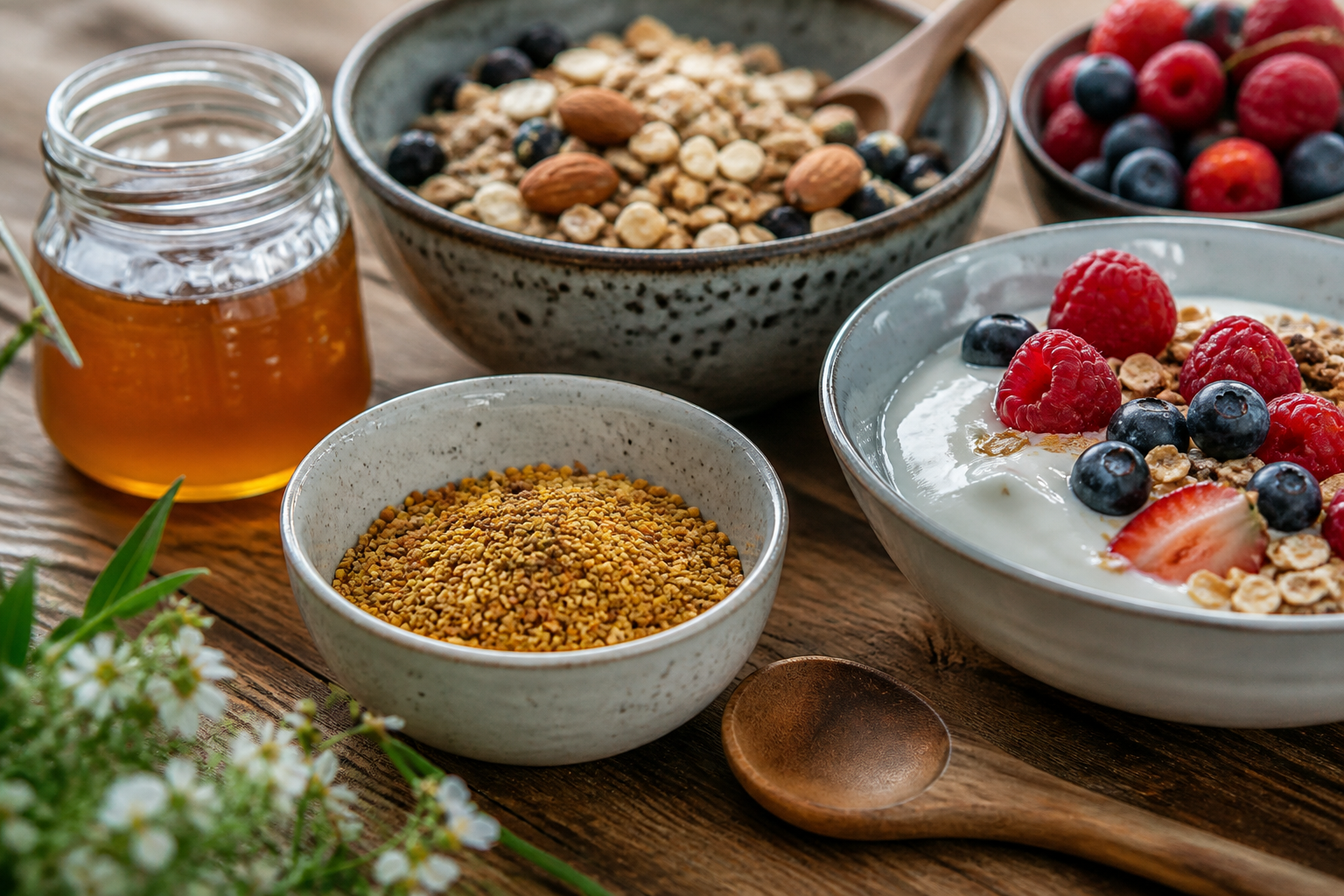
Sprinkled over yoghurt
Added to porridge
Mixed into smoothies
Used with overnight oats
If you want a bee product that fits naturally into meals, bee pollen is often the easier starting point.
What Is Royal Jelly?
Royal jelly is a very different product. It is produced by worker bees and is traditionally known as the food given to the queen. That alone makes it distinct from both honey and bee pollen.
Shoppers usually choose royal jelly because they want royal jelly specifically, rather than a bee product to scatter over breakfast. In other words, it tends to be a more deliberate purchase.
Why some shoppers choose royal jelly
They want to explore a wider range of bee products.
They are specifically interested in royal jelly rather than a general food topping.
They prefer to buy from a specialist bee product business instead of a generic marketplace seller.
If you are looking at royal jelly, you are usually not making the same kind of buying decision as someone choosing bee pollen for porridge or yoghurt. The purpose, feel and routine are different.
Bee Pollen vs Royal Jelly: The Key Differences That Matter When You Buy
1. They come from different parts of hive life
This is the most important difference. Bee pollen is linked to the pollen bees gather from flowers. Royal jelly is produced by worker bees to feed the queen. They are related only in the sense that both are bee products.
That means you should not assume one is simply a stronger version of the other. They are separate products with different characteristics.
2. They tend to suit different routines
Bee pollen is often chosen by people who want something that works naturally with food. Royal jelly is often chosen by people who already know they want royal jelly as part of their broader bee product purchase.
If convenience at breakfast matters most, bee pollen may feel more intuitive. If you are specifically drawn to royal jelly, that is a different kind of decision.
3. The buying intention is different
Someone searching for bee pollen is often asking, “How can I use this every day?” Someone searching for royal jelly is often asking, “Is this the royal jelly I want to buy?”
That difference matters because it changes what makes a product feel right. Bee pollen buyers are often thinking about everyday use. Royal jelly buyers are often thinking about product choice, source and trust.
4. One is not automatically “better” than the other
This is where many comparison articles go wrong. There is no universal winner in the bee pollen vs royal jelly debate because the better choice depends on the person buying it.
If you want a bee product that feels simple to work into meals, bee pollen may be the better fit.
If you want royal jelly specifically, then royal jelly is the better fit.
If you enjoy exploring different hive products, there may be room for both in your cupboard.
The key is to avoid buying on hype alone. Choose the product you are actually likely to use.
5. Provenance matters just as much as the product
Whether you buy bee pollen or royal jelly, the seller matters. Online listings can look similar, but the business behind the product tells you a lot.
Before you order, it is worth checking a few basics:
Is there a real business name behind the product?
Is there a proper UK address?
Does the business specialise in bee products or just list everything?
Is there a clear website and straightforward ordering process?
Can you see genuine customer feedback?
These checks help you separate a specialist apiary from an anonymous listing with very little real provenance.
Which Bee Product Should You Buy?
If you are still deciding between bee pollen and royal jelly, this quick guide can help.
Choose bee pollen if:
You want a bee product that fits easily into breakfast or snacks.
You like the idea of adding it to foods such as yoghurt, smoothies or oats.
You prefer a simple, food-friendly starting point.
Choose royal jelly if:
You are specifically looking for royal jelly rather than a general bee product.
You want to buy from a business that understands and specialises in hive products.
You are building a more considered bee product routine.
Consider both if:
You enjoy different bee products for different routines.
You want variety rather than a one-product approach.
You prefer to compare the range from one trusted specialist supplier.
If you are new to both, starting with the product that feels easiest to use is often the most sensible choice. A product only adds value if it genuinely suits your habits.
Why Buy From Llangattock Apiaries?
When you compare bee pollen vs royal jelly, you are not just comparing products. You are also deciding who you want to buy from.
At Llangattock Apiaries, we are a real Welsh apiary business based at Dan Y Parc, Crickhowell, NP8 1HN. We have been established since 2002 and manage 320 hives along the Usk Valley on the eastern edge of the Brecon Beacons National Park in South East Wales.
Our bees gather pollen from wildflowers and heathers along the riverbanks and on the slopes of the Black Mountains. We specialise in bee-related products including honey, pollen, royal jelly and beeswax, which gives customers a clearer sense of provenance than buying from a vague marketplace seller.
We are also proud of our 5-star reviews, and customers regularly praise our quality, range, delivery and service. If you want to shop directly from our Welsh apiary, buying from a named specialist business gives you more confidence in what you are ordering.
Frequently Asked Questions
What is the main difference between bee pollen and royal jelly?
The main difference is that they are separate bee products with different origins and different uses. Bee pollen is usually chosen as a food-friendly product, while royal jelly is usually chosen by shoppers specifically looking for royal jelly.
Is bee pollen or royal jelly easier to use every day?
For many people, bee pollen feels easier to use daily because it can be added to familiar foods such as yoghurt, porridge, smoothies or oats. Royal jelly is a different kind of purchase and is typically chosen more intentionally.
Can I buy bee pollen and royal jelly online in the UK?
Yes, but it is worth buying from a genuine specialist business with a clear UK presence, proper contact details and real customer feedback. You can compare our bee pollen and royal jelly range online through Llangattock Apiaries.
What should I look for when buying bee products online?
Look for clear provenance, a named business, a real address, specialist knowledge, transparent ordering and trustworthy reviews. Those details often tell you more than a low price ever will.
What should I check before trying bee pollen or royal jelly for the first time?
If you have known allergies to pollen or bee products, or you are unsure whether a product is suitable for you, take extra care and seek professional advice before use. It is always sensible to read the product information carefully and choose a trusted seller.
Final Thoughts
When it comes to bee pollen vs royal jelly, there is no one-size-fits-all answer. Bee pollen often suits people who want an easy food-based routine, while royal jelly suits people who are specifically looking for that distinct bee product.
The smarter choice is the one that matches your habits and comes from a specialist you trust. If you are ready to compare the options, browse our bee pollen and royal jelly range online and choose the bee product that best fits your daily routine.
Comments